
Manufacturers operating facilities across multiple states face a unique environmental challenge. While federal regulations establish baseline environmental requirements, individual states often impose additional permitting, reporting, monitoring, and operational obligations. As a result, a compliance strategy that works in one state may not satisfy requirements in another.
Managing multi-state environmental compliance requires more than tracking permits and submitting reports. Manufacturers must coordinate environmental responsibilities across facilities, monitor regulatory changes, maintain consistent documentation, and ensure compliance programs remain effective across different jurisdictions.
Organizations that establish a proactive compliance framework are better positioned to reduce risk, improve audit readiness, and support long-term operational success.
What Is Multi-State Environmental Compliance?
Multi-state environmental compliance refers to the process of managing environmental obligations across manufacturing facilities located in different states while maintaining compliance with federal, state, and local regulations.
Manufacturers operating across multiple jurisdictions often encounter differences in:
- Air permitting requirements
- Hazardous waste regulations
- Stormwater compliance obligations
- Wastewater discharge permits
- Chemical reporting programs
- Environmental monitoring requirements
- Recordkeeping standards
- Reporting schedules and deadlines
Because environmental regulations vary by state, manufacturers need a structured compliance strategy that addresses both corporate-wide standards and facility-specific requirements.
Why Multi-State Compliance Is More Complex for Manufacturers
As manufacturers expand operations, environmental responsibilities become increasingly difficult to manage.
Common challenges include:
Regulatory Variations
Each state may implement environmental regulations differently, resulting in varying permit requirements, reporting obligations, and compliance expectations.
Multiple Permit Programs
Organizations often manage dozens of permits across facilities, each with unique monitoring requirements, expiration dates, and renewal schedules.
Evolving Environmental Regulations
Environmental laws and agency guidance frequently change, making ongoing regulatory monitoring essential.
Documentation Inconsistencies
Without standardized procedures, facilities may maintain records differently, increasing the risk of compliance gaps.
Increased Audit and Inspection Exposure
Manufacturers operating in multiple states may face inspections from several regulatory agencies, making consistency across facilities critical.
Managing Compliance Across Multiple States?
Get expert support to navigate state-specific requirements and strengthen compliance across every facility.
Key Areas of Multi- State Environmental Compliance
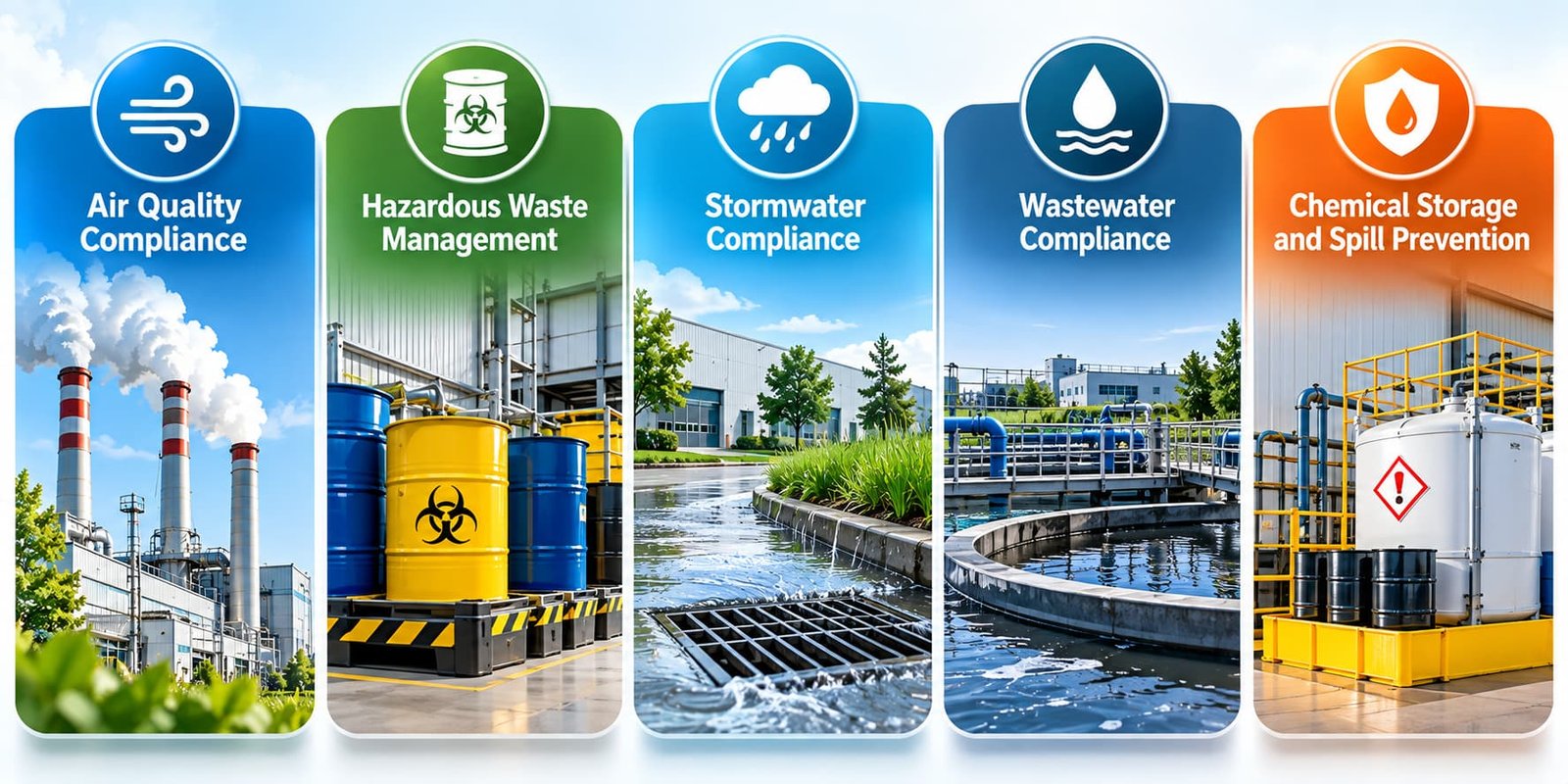
Air Quality Compliance
Manufacturing facilities must comply with permit conditions, emissions limits, monitoring requirements, and reporting obligations.
Best practices include:
- Maintaining current permits
- Tracking emission sources
- Monitoring permit limits
- Documenting inspections and testing
- Submitting reports on schedule
Hazardous Waste Management
Waste management regulations often vary between states, creating additional compliance responsibilities.
Facilities should:
- Identify regulated waste streams
- Properly label containers
- Conduct storage area inspections
- Maintain disposal records
- Train employees on waste handling procedures
Stormwater Compliance
Many industrial facilities require stormwater permit coverage and ongoing monitoring.
Key activities include:
- Maintaining permit compliance
- Inspecting stormwater controls
- Conducting required sampling
- Tracking corrective actions
- Updating stormwater plans
Wastewater Compliance
Facilities that discharge wastewater must manage permits, sampling programs, monitoring activities, and reporting obligations.
Manufacturers should routinely review:
- Permit conditions
- Monitoring results
- Treatment system performance
- Sampling schedules
- Reporting deadlines
Chemical Storage and Spill Prevention
Proper chemical management reduces environmental risk and improves regulatory readiness.
Recommended practices include:
- Maintaining chemical inventories
- Inspecting storage areas
- Evaluating containment systems
- Updating spill prevention procedures
- Verifying emergency response readiness
Building an Effective Environmental Compliance Management Program
A successful environmental compliance management program creates consistency across facilities while addressing state-specific regulatory requirements.
Centralized Compliance Tracking
Organizations should maintain a centralized system for:
- Permit management
- Reporting deadlines
- Inspection schedules
- Environmental documentation
- Corrective action tracking
Centralized oversight improves visibility and helps prevent missed obligations.
Standardized Environmental Procedures
Company-wide procedures help ensure facilities follow consistent compliance practices.
Examples include:
- Inspection programs
- Recordkeeping standards
- Incident reporting procedures
- Waste management protocols
- Employee training requirements
Regulatory Change Monitoring
Manufacturers should continuously track environmental regulatory developments in every state where they operate.
This helps organizations:
- Anticipate regulatory changes
- Update compliance programs proactively
- Avoid compliance surprises
Internal Compliance Audits
Routine audits help identify issues before regulators do.
Audits should evaluate:
- Permit compliance
- Documentation quality
- Reporting accuracy
- Operational controls
- Employee training records
The Value of Multi- State Environmental Consulting
Many organizations rely on multi-state environmental consulting services to manage regulatory complexity and improve compliance oversight.
Environmental consultants can assist with:
- Regulatory requirement reviews
- Permit management
- Compliance audits
- Environmental reporting
- Documentation systems
- Regulatory change monitoring
- Environmental training
- Inspection preparation
External expertise can be particularly valuable for manufacturers managing multiple facilities, expansion projects, or rapidly changing environmental obligations.
How Ivy Environmental Supports Manufacturers
Ivy Environmental works with manufacturers to develop practical environmental compliance solutions that support operational goals while reducing regulatory risk.
Our team helps organizations:
- Assess environmental compliance obligations
- Manage environmental permits
- Conduct compliance audits
- Improve environmental documentation
- Support regulatory reporting
- Develop environmental management programs
- Monitor regulatory changes
- Strengthen environmental oversight across facilities
By combining technical expertise with industry experience, Ivy Environmental helps manufacturers create scalable compliance programs that support both current operations and future growth.
Best Practices for Managing Multi- State Environmental Compliance
Manufacturers that successfully manage compliance across multiple states often follow several key strategies:
Maintain a Central Compliance Calendar
Track permit renewals, reporting deadlines, inspections, and monitoring activities in one system.
Standardize Environmental Documentation
Use consistent forms, procedures, and recordkeeping practices across facilities.
Conduct Routine Compliance Reviews
Regular reviews help identify potential compliance issues before they escalate.
Invest in Employee Training
Employees should understand both corporate environmental policies and facility-specific responsibilities.
Leverage Environmental Management Systems
Technology can improve compliance visibility, reporting efficiency, and documentation management across multiple locations.
Engage Environmental Specialists
Experienced consultants can provide additional expertise and support for complex compliance programs.
Benefits of Strong Environmental Compliance Management
An effective compliance program delivers benefits beyond regulatory compliance.
Organizations often experience:
- Reduced environmental risk
- Improved operational consistency
- Better audit preparedness
- Enhanced documentation quality
- Improved permit management
- Greater visibility across facilities
- Stronger regulatory confidence
- Increased operational efficiency
Proactive compliance management helps manufacturers spend less time responding to issues and more time focusing on business objectives.
Conclusion
Managing multi-state environmental compliance requires a strategic approach that combines centralized oversight, facility-specific accountability, proactive monitoring, and consistent environmental practices.
As environmental regulations continue to evolve, manufacturers must ensure compliance programs remain adaptable, organized, and scalable across all locations.
By implementing a structured environmental compliance management program and leveraging experienced multi-state environmental consulting support when needed, manufacturers can reduce risk, improve compliance performance, and strengthen long-term operational success.
Organizations that proactively manage environmental responsibilities are better prepared for inspections, regulatory changes, expansion opportunities, and the increasing demands of modern manufacturing operations.
Frequently Asked Questions
How do environmental regulations differ between states for manufacturers?
While federal regulations establish baseline requirements, individual states may impose stricter permitting standards, reporting requirements, monitoring obligations, or enforcement policies. Manufacturers operating in multiple states must evaluate each facility’s specific regulatory obligations.
What is the biggest compliance risk for manufacturers with facilities in multiple states?
One of the most common risks is assuming that a compliance program implemented at one facility automatically satisfies requirements at another location. State-specific regulations often create unique obligations that require separate oversight.
Can acquisitions create environmental compliance challenges?
Yes. Acquired facilities may have different permits, historical compliance issues, reporting schedules, or environmental liabilities. Conducting environmental due diligence before and after acquisitions helps identify and address potential risks.
How can technology improve environmental compliance management?
Environmental management software can help organizations track permits, monitor deadlines, store documentation, manage corrective actions, and improve visibility across multiple facilities from a centralized platform.
What happens if environmental reporting deadlines are missed?
Missed reporting deadlines can lead to regulatory scrutiny, notices of violation, financial penalties, and increased inspection activity. Maintaining a centralized compliance calendar helps reduce this risk.
How can environmental compliance affect business expansion plans?
Environmental requirements often influence facility siting, permitting timelines, construction schedules, operational approvals, and project costs. Early compliance planning can help avoid delays during expansion projects.
What environmental metrics should multi-site manufacturers track?
Organizations commonly monitor permit status, inspection findings, corrective action completion rates, emissions data, waste generation volumes, training completion records, and regulatory reporting performance.
How does strong environmental compliance support ESG initiatives?
Environmental compliance provides the operational foundation for many Environmental, Social, and Governance (ESG) objectives by improving environmental performance, documentation quality, regulatory transparency, and risk management practices.
What should manufacturers look for when selecting a multi-state environmental consulting partner?
Manufacturers should evaluate industry experience, regulatory expertise, geographic coverage, audit capabilities, permitting knowledge, reporting support, and the ability to provide consistent guidance across multiple facilities.