
Manufacturing facilities operate under a complex network of environmental regulations that govern air emissions, hazardous waste, stormwater, wastewater, chemical storage, and environmental reporting. Missing a single compliance requirement can result in regulatory violations, operational disruptions, increased scrutiny from agencies, and costly corrective actions.
A proactive environmental compliance program helps manufacturers identify risks before they become problems. By following a structured compliance checklist, facilities can improve environmental performance, maintain regulatory readiness, and support long-term operational success.
What Is Manufacturing Environmental Compliance?
Manufacturing environmental compliance refers to the process of meeting all applicable federal, state, and local environmental regulations that affect industrial operations. Compliance responsibilities often include permit management, environmental monitoring, reporting, inspections, waste management, spill prevention, and documentation.
Successful manufacturing environmental compliance requires ongoing oversight rather than periodic corrective actions. Facilities that integrate compliance into daily operations are typically better prepared for inspections and regulatory changes.
Why Manufacturers Need a Compliance Checklist
Environmental regulations continue to evolve, making it difficult for facility managers and environmental teams to keep track of every requirement.
A structured checklist helps organizations:
- Identify compliance gaps before inspections
- Improve permit management
- Strengthen environmental documentation
- Reduce operational and regulatory risk
- Improve internal accountability
- Support continuous environmental improvement
- Maintain audit readiness year-round
Strengthen Your Environmental Compliance Program
Get expert support to improve documentation, permits, reporting, and audit readiness.
Environmental Compliance Requirements for Manufacturing Facilities
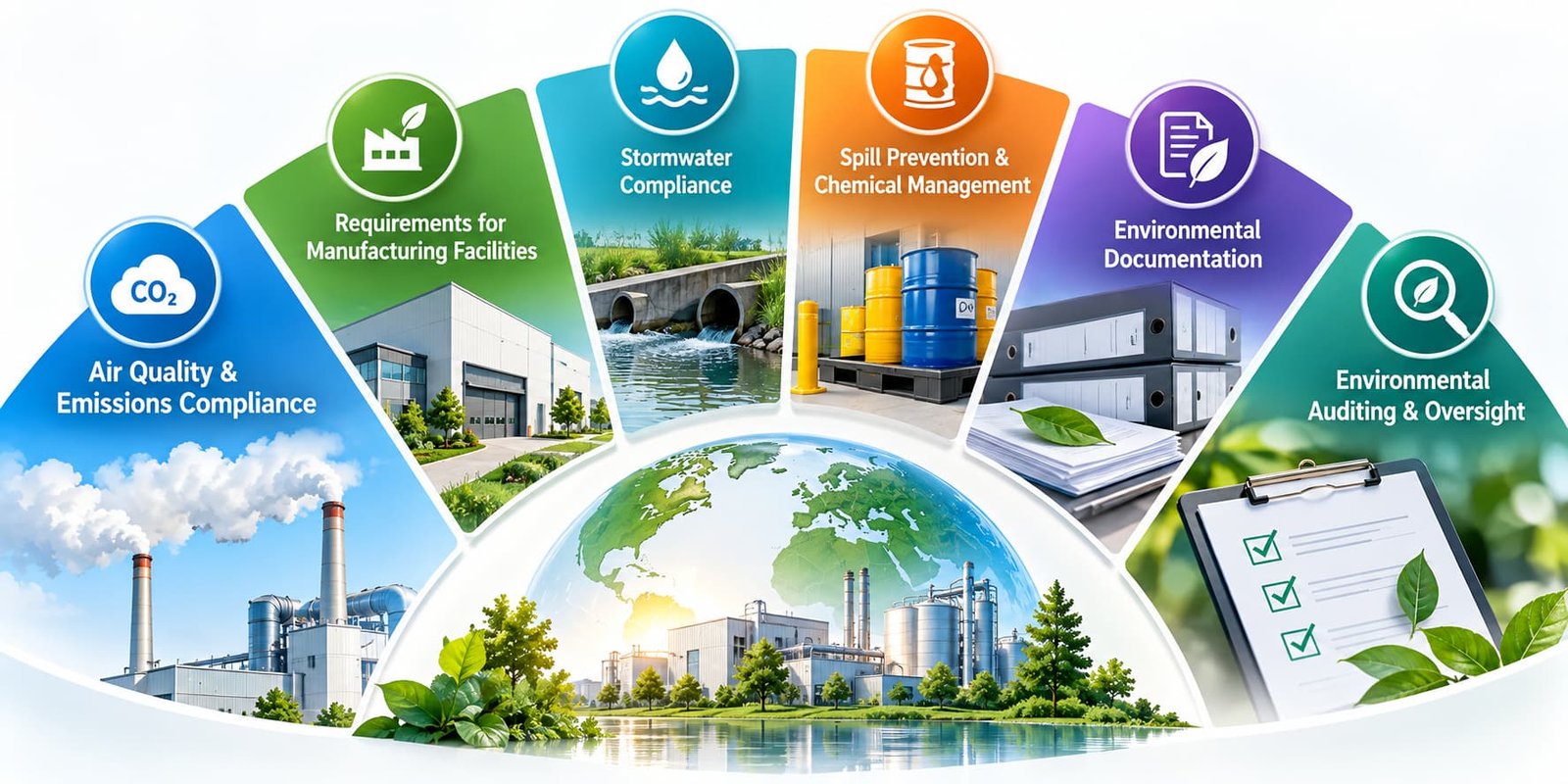
A. Air Quality & Emissions Compliance
1. Verify Air Permit Requirements
Review all operating permits and confirm that facility operations remain consistent with permit conditions.
2. Track Emission Sources
Maintain an updated inventory of equipment and processes that generate regulated emissions.
3. Monitor Permit Limits
Ensure emissions remain within authorized thresholds.
4. Maintain Monitoring Records
Keep monitoring, testing, and inspection records organized and accessible.
5. Submit Required Air Reports
Verify that all emissions reports and certifications are submitted on time.
B. Requirements for Manufacturing Facilities
6. Identify Waste Streams
Determine which wastes are regulated and how they must be managed.
7. Label Waste Containers Properly
Ensure all containers are clearly marked and compliant with regulatory requirements.
8. Inspect Storage Areas Regularly
Conduct routine inspections and document findings.
9. Maintain Waste Shipment Records
Retain manifests and disposal documentation.
10. Train Employees on Waste Handling
Provide recurring training for personnel involved in waste management activities.
C. Stormwater Compliance
11. Review Stormwater Permit Coverage
Confirm that permits remain current and applicable.
12. Inspect Stormwater Controls
Evaluate drainage systems, containment measures, and runoff controls.
13. Conduct Required Sampling
Complete all required monitoring and testing activities.
14. Maintain Inspection Logs
Document inspections and corrective actions.
D. Spill Prevention & Chemical Management
15. Update Spill Prevention Procedures
Review response plans and emergency procedures annually.
16. Evaluate Secondary Containment Systems
Inspect containment structures around tanks and chemical storage areas.
17. Maintain Chemical Inventories
Track materials stored onsite and update inventories regularly.
18. Verify Emergency Response Readiness
Ensure spill kits and emergency equipment remain available and functional.
E. Environmental Documentation
19. Organize Compliance Records
Maintain a centralized environmental documentation system.
20. Track Regulatory Deadlines
Use a compliance calendar to monitor permit renewals and reporting obligations.
21.Retain Inspection Reports
Store inspection records according to regulatory requirements.
F. Environmental Auditing & Oversight
22. Conduct Internal Compliance Reviews
Perform periodic assessments to identify potential issues.
23. Review Operational Changes
Evaluate whether process modifications trigger additional regulatory obligations.
24. Assess Environmental Risks
Identify emerging risks associated with expansion projects or new operations.
25. Schedule Independent Compliance Audits
Use third-party assessments to validate compliance programs and uncover improvement opportunities.
How an Environmental Compliance Consultant Helps Manufacturer
Many organizations rely on an environmental compliance consultant to provide specialized expertise, regulatory guidance, and ongoing oversight.
An experienced consultant can help:
- Evaluate compliance obligations
- Manage environmental permits
- Conduct compliance audits
- Improve documentation systems
- Monitor regulatory developments
- Support environmental reporting
- Prepare facilities for inspections
- Reduce environmental risk
By working with a consultant, manufacturers gain access to technical expertise without the cost of expanding internal environmental staff.
Benefits of Professional Environmental Compliance Services
Professional environmental compliance services help manufacturers maintain consistency across multiple facilities and regulatory programs.
Key benefits include:
- Reduced compliance risk
- Improved operational efficiency
- Better environmental documentation
- Enhanced inspection preparedness
- Stronger permit management
- Improved regulatory confidence
- Long-term environmental program improvement
Facilities that proactively manage compliance often spend less time responding to issues and more time focusing on operations.
Conclusion
Environmental compliance is not a one-time project. It requires continuous attention, organized documentation, proactive planning, and regular evaluation of environmental responsibilities.
Using a structured compliance checklist helps manufacturing facilities identify gaps, improve environmental performance, and maintain confidence when facing inspections, permit reviews, and changing regulations. Whether managed internally or with support from environmental compliance services, a proactive compliance strategy remains one of the most effective ways to reduce environmental risk and support sustainable operations.
Frequently Asked Questions
What is manufacturing environmental compliance?
Manufacturing environmental compliance is the process of meeting environmental regulations related to air emissions, waste management, stormwater, wastewater, chemical storage, environmental reporting, and permit obligations.
Why is environmental compliance important for manufacturers?
Environmental compliance helps organizations reduce regulatory risk, avoid violations, maintain permits, improve operational performance, and support sustainable business practices.
How often should manufacturing facilities perform environmental compliance reviews?
Most facilities benefit from quarterly compliance reviews and annual comprehensive assessments, although requirements vary based on operations and permit conditions.
What does an environmental compliance consultant do?
An environmental compliance consultant helps organizations manage permits, evaluate compliance obligations, conduct audits, improve environmental programs, and navigate complex regulatory requirements.
What are environmental compliance services?
Environmental compliance services include permitting assistance, environmental audits, regulatory reporting, compliance assessments, documentation management, environmental program oversight, and ongoing regulatory support.
How can manufacturers prepare for environmental inspections?
Facilities should maintain organized records, review permit conditions, conduct internal inspections, address deficiencies, and ensure employees understand environmental responsibilities.
What are the most common compliance gaps found during audits?
Common issues include incomplete documentation, missed reporting deadlines, permit deviations, inadequate training records, and inconsistent inspection practices.
Can environmental compliance services support multi-site manufacturing operations?
Yes. Many organizations use environmental compliance services to coordinate regulatory responsibilities, reporting requirements, audits, and permit management across multiple locations.
How does proactive compliance reduce business risk?
Proactive compliance helps identify issues early, improve operational controls, reduce enforcement risk, and strengthen environmental management systems before problems escalate.
When should a manufacturer hire an environmental compliance consultant?
Manufacturers often engage consultants when opening new facilities, expanding operations, applying for permits, preparing for inspections, or strengthening existing environmental programs.